Birth Heroines: Wendy Savage – The Obstetrician Who Challenged the System
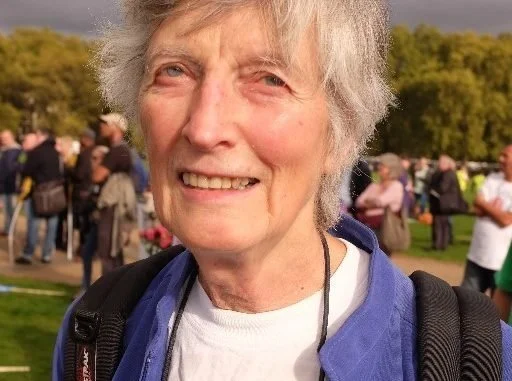
I’ve been thinking a lot about the women who stood up for our rights in the past. The ones who refused to bow down to a system that treated women as passive bodies rather than intelligent human beings capable of decision-making and instinct.
Their courage gives me hope.
They went against the grain, often at great personal cost, simply because they knew something most people around them weren’t ready to hear: women deserve autonomy. Women deserve information. Women deserve respect.
Rights we take for granted today were fought for inch by inch
— and they can be undone frighteningly fast if we’re not vigilant.
One of the women whose story deserves to be remembered is Wendy Savage
- mentioned in the HOSC by Dr Richard Green in challenging the homebirth suspension last week.
Who Is Wendy Savage?
Wendy Savage was born on 12 April 1935 in South London and raised in Surrey.
She was the first in her family to enter university, winning a place at Girton College, Cambridge, where she threw herself into sport as well as academic life. She began her medical training at the London Hospital Medical College in 1957, choosing obstetrics and gynaecology because she wanted to work with women and their families.
She was never one to shy away from hard work or unfamiliar terrain.
The first fifteen years of her career took her to America and Africa, supporting women in extraordinarily difficult circumstances — long before “global women’s health” became a fashionable phrase.
After gaining her MRCOG, she struggled to be shortlisted for a Senior Registrar post. This was the 1970s; a woman with strong views on reproductive rights didn’t fit neatly into the expected mould. So she did what she always did: she carried on. She spent time working as a consultant in New Zealand and then accepted a role supporting women from deprived backgrounds in Boston, USA. When that position fell through unexpectedly, she returned to England.
Back in London she worked briefly as a lecturer for Peter Huntingford — another outspoken figure in birth rights — and then successfully applied for a Senior Lecturer and Honorary Consultant position at the London Hospital Medical College. She was an advocate for women’s reproductive freedom and respectful, physiological birth from the beginning.
And then came the clash.
The Professor vs. the Birth Rebel
A new professor took over the department — someone firmly rooted in the old medicalised model of childbirth.
The relationship quickly soured.
Wendy supported VBAC.
The professor favoured automatic repeat caesareans.
Wendy believed women had a right to choose home birth.
Her professor thought it was dangerous nonsense.
Wendy wanted informed consent; he wanted compliance.
Two models of care collided, and Wendy refused to shrink back.
The resistance built quietly at first — subtle disapproval, whispers about her “radical” views.
And then, in 1985, it exploded.
Wendy Savage was suddenly accused of incompetence by four senior colleagues.
Not because her outcomes were unsafe.
Not because she had harmed women.
But because she practised differently.
She became the subject of a judicial inquiry investigating “serious professional malpractice”
— a phrase carefully chosen to try to remove her from her post altogether.
The birth community was torn in two.
Some midwives and doctors stood behind her.
Others vilified her.
Women across East London rallied to her defence.
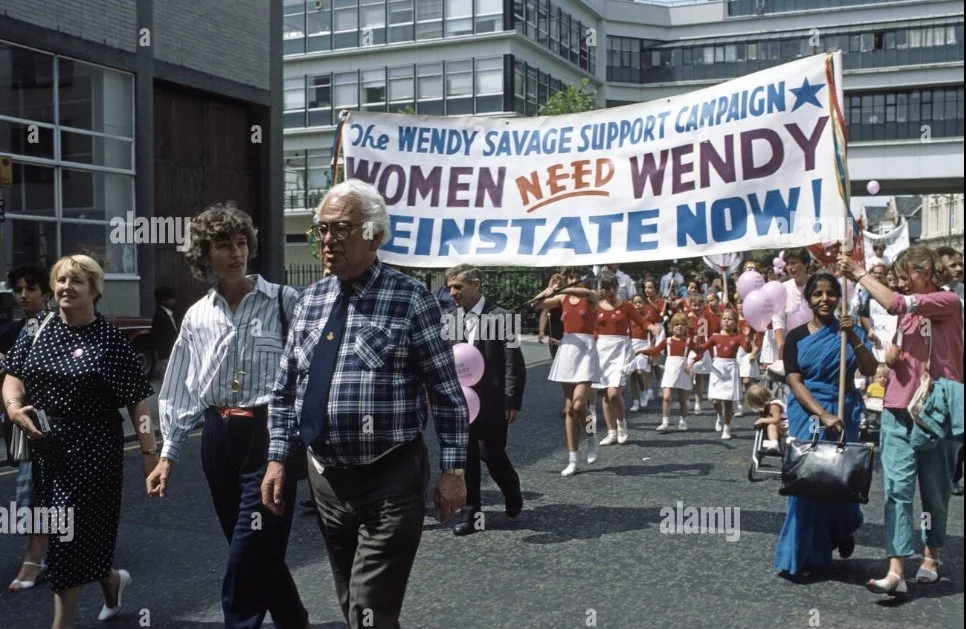
Wendy later said:
“I’ve always been determined
– it was stupid to take on somebody like me.”
And she was right.
The inquiry — now known as The Savage Report — found no incompetence.
No malpractice.
No dangerous outcomes.
Her work was safe, evidence-based, and grounded in physiology.
The real conflict was ideological: a battle between two worldviews about birth.
Wendy won.
All charges were dismissed.
What Happened Next
The publicity was huge.
Wendy Savage became a household name in maternity care and an early symbol of the fight for woman-centred practice. She continued working at Mile End Hospital, supported by local women, fellow clinicians, and a growing network of birth activists who recognised the importance of what she had stood up for.
She was the first female consultant in obstetrics and gynaecology at the London Hospital — and her legacy is undeniable.
Dr Jacky Davis described her perfectly:
“She has achieved what she has by challenging the medical establishment. She will speak truth to power. To me she is heroic. She stood alone in the face of criticism where other people would have crumbled.”
Since those early battles, the landscape has changed.
More women have entered obstetrics.
Informed consent — at least on paper — is considered a basic standard.
VBAC is recognised as reasonable.
Home birth is accepted by national guidance.
Continuity-of-care models are backed by evidence.
Wendy helped open that door.
She also served 16 years on the General Medical Council and was re-elected to the BMA Council in later life.
Even into her 80s, she showed no signs of stepping back from speaking truth to power.
Why Her Story Matters Today
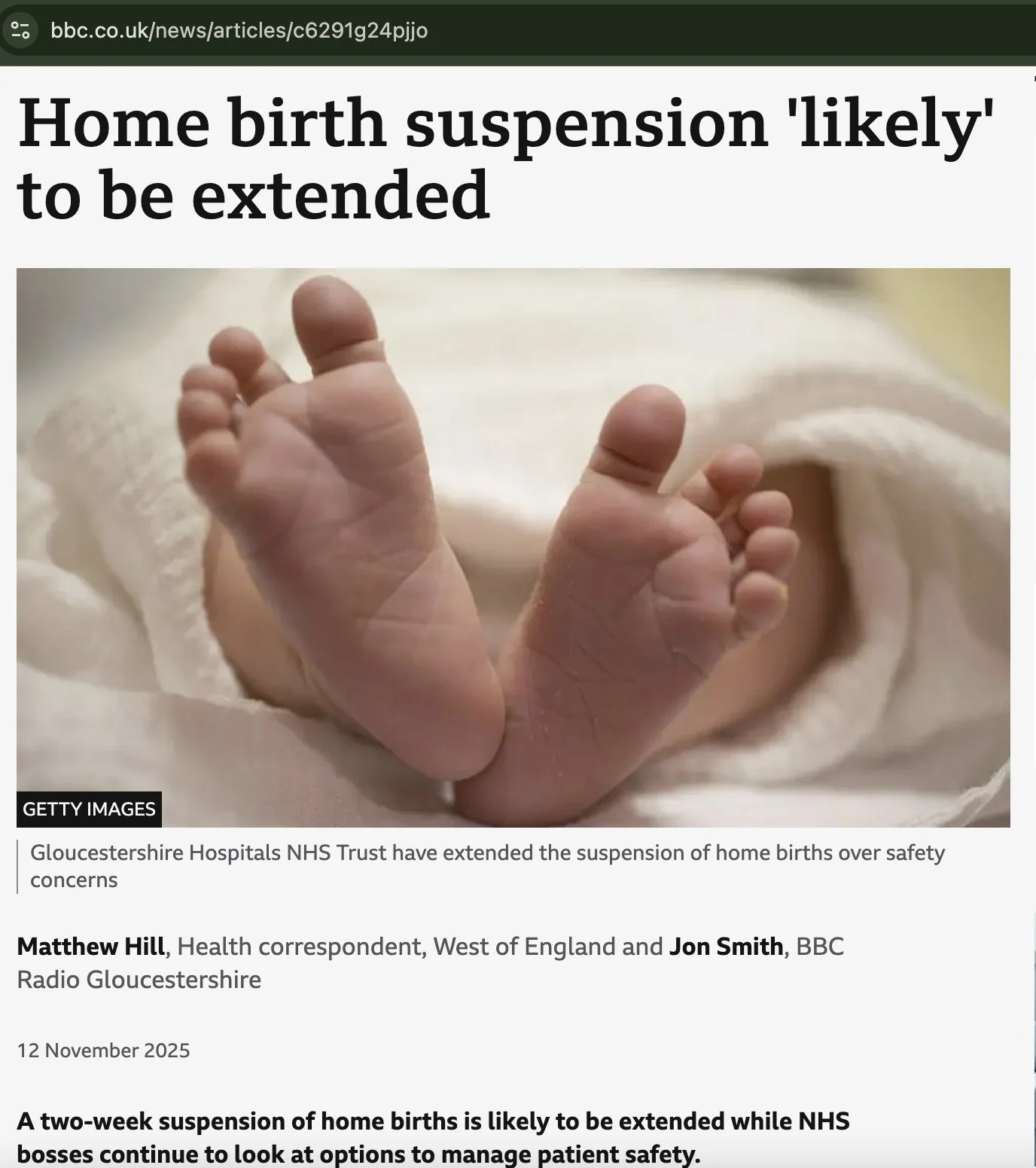
We are now in another moment where maternity care is slipping backwards — in Gloucestershire and across the UK.
Services stripped back.
Continuity teams dismantled.
Women pushed into obstetric units because community care is collapsing.
Home birth suspended without proper justification.
And today we hear the Gloucestershire caesarean rate has hit 49%.
Half.
Every second woman having major abdominal surgery.
This isn’t “safety.”
This is a system shaping outcomes, not physiology.
Wendy Savage’s story is a reminder that people can challenge medical culture — and win. But only if we stay awake, stay vocal, and refuse to let women’s rights be quietly dismantled.
Her courage gives me strength to keep going.
Birth Heroines: Wendy Savage.
May her legacy continue to light the path for every woman pushing for autonomy, truth, and respect in childbirth.