Twin Pregnancy & Birth: Beyond Fear, Guidelines and the ‘Allowing’ of Women’s Bodies
Reclaiming choice, intuition and trust when you're growing more than one baby.
I have always had an absolute love and fascination with twins and multiples. From the pregnancy itself, and the extraordinary ability of the female body to do something so miraculous twice, thrice or even more!
But my fascination goes far beyond pregnancy and birth.
It's about mothering. Attachment. The practicalities of caring for and nurturing two, three or more babies at once. Making space in your home, your arms, your days and your heart for these new little souls. Finding your way into motherhood, or into a whole new experience of mothering if you already have children.
And what an extraordinary journey that is!
Now, add into this mix our current medical paradigm of fear, risk management and the deeply ingrained belief that more surveillance must automatically mean safer outcomes for mothers and babies.
When there's more than one baby, the monitoring, the appointments, the risk conversations and the pressure to follow particular pathways can increase enormously.
And somewhere in all of this, the mother herself can begin to disappear.
Her instincts, her intuition, her growing relationship with her babies, her own sense of what feels right for her and her family.
The very things that are so important as she begins her journey into motherhood.
The awakening of that mama bear.

This article brings together some of the ways I believe our current maternity paradigm is getting things wrong. Not because the individuals working within it don't care. Quite the opposite.
I believe most of the people working in maternity services genuinely want the best for the women and babies they care for. They want to prevent suffering, avoid tragedy and protect families from the risks they have been trained to recognise.
But good intentions do not automatically guarantee good outcomes.
And sometimes, in our determination to prevent what might go wrong, we interfere with, or undermine, processes that might otherwise have unfolded beautifully.
Take, for example, the number of women pregnant with twins who are told that they are simply not allowed to continue their pregnancies beyond a particular date.
NOT ALLOWED.

Let's just take a moment to reflect on those words.
Not allowed.

As though your pregnancy belongs to somebody else. As though permission must be granted to continue growing your own babies inside your own body.
You may even believe those words yourself right now.
And even if, logically and rationally, you know that they aren't true, you may already be so far down the pathway of obstetric management that doing anything differently feels dangerous, irresponsible or even reckless.
So you keep testing, checking, scanning and monitoring.
Not necessarily because you have consciously decided that each of these things is right for you, but because stepping away from the pathway feels frightening.
And that is a very different thing from making a genuinely informed choice.
This is not about pulling you in the opposite direction

Now, I want to make something very clear.
This article is not here to put pressure on you.
I am not standing on the other side of a tug of war, with obstetrics pulling you one way and the 'natural birth mafia' pulling you the other.
I have absolutely no interest in replacing one set of rules with another.
I want you to see the information I'm about to share as a doorway into a different paradigm.

One where YOU get to decide.
One where medical professionals are not the gods who tell you what is right or wrong, what you must do, what you may do, or what you are allowed to do.
And one where declining something that is offered doesn't automatically mean you're being difficult, irresponsible or 'going against medical advice'.
In my paradigm, medical professionals have some incredibly important tools, knowledge and skills. Tools that can be invaluable, sometimes lifesaving, and which we may choose to call upon in particular circumstances.
Sometimes that decision might come from clear clinical information. Sometimes from a conversation, a change in circumstances, or even a gut feeling that something isn't quite right.
But the decision to accept or decline an intervention still belongs to you.
You can listen to the information, explore the possibilities, weigh up the risks, seek another opinion, change your mind.
You can welcome skilled medical support without handing over ownership of your pregnancy or birth.
These things are not mutually exclusive.
There is so much more to birth than simply getting babies out alive
Being healthy, strong and well nourished, physically, emotionally and spiritually matters.
Only you and your family will live with the outcome of your pregnancy and birth.
And of course, we all want living, healthy mothers and babies. I cannot imagine anybody wanting otherwise.
There is so much more happening during pregnancy and birth than whether everyone survives or not.
Whatever lens you choose to understand this through, becoming a mother, birth is an extraordinary transition.
A woman is being born into motherhood. A new family is being born.
There is bonding, attachment, hormonal physiology, recovery, feeding, emotional wellbeing and the foundations of the relationships that will carry this family forward.
And these things deserve consideration too.
Take caesarean birth, for example.
A caesarean can be an almost magical, genuinely lifesaving operation. There are of course times where this surgery has made the difference between life and death, and I for one am so grateful that this skill exists.
But it is also major abdominal surgery.
Caesarean carries both immediate and longer-term implications for the mother, including surgical recovery and potential complications in future pregnancies.
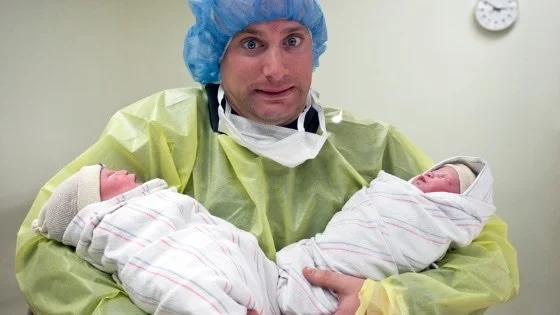
There are also strong associations between caesarean birth and higher rates of certain childhood conditions, including exzma, asthma and obesity.
And again, this isn’t saying caesarean birth is bad, or wrong.
It’s about having the awareness that every intervention has potential benefits, limitations and consequences.
And informed decision-making means being allowed to look at all of them.
Another uncomfortable truth: More intervention does not automatically mean more safety
Medical interventions cannot save every mother or every baby.
This is the heartbreaking reality of life.
No matter how many scans we have, how many tests we undertake, or how much technology we surround ourselves with, there will always be uncertainty.
Some forms of medical intervention undoubtedly save lives.
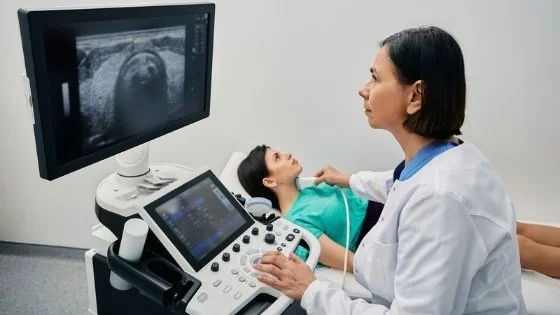
But surveillance is not the same thing as prevention,
and discovering a potential problem isn't necessarily the same as being able to prevent it.
Monitoring can provide useful information. It also produces false alarms, uncertainty, anxiety and a cascade of further investigations and interventions.
And every additional test. check or intervention deserves the same question:
Is this actually improving the outcome for this mother and these babies?
For decades, the World Health Organization has raised questions about rising caesarean rates. Its research found that, at population level, increases in caesarean rates beyond approximately 10% were not associated with further reductions in maternal and newborn mortality.
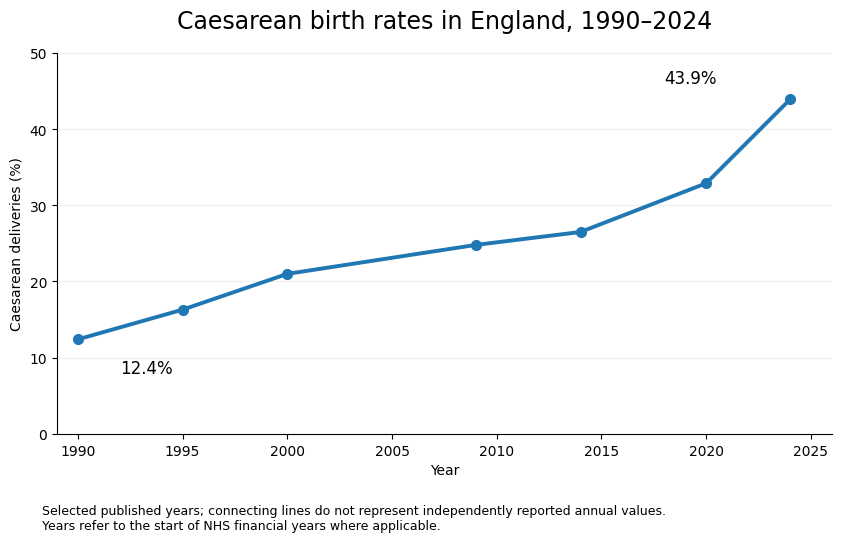
Yet in England, caesarean birth now accounts for around 45% of deliveries.
Of course, population statistics cannot tell us whether an individual caesarean was necessary or beneficial. But they do raise important questions about what we are measuring, what we are prioritising, and whether increasingly intervention-heavy maternity care is delivering the outcomes we hope for.
More caesareans do not automatically equal healthier mothers and babies.
More monitoring does not automatically equal better care.
And more medical management, with less continuity of care has seen a huge rise in the number of women experiencing birth as traumatic.
The promise of safety

If you're still reading, well done I’m glad you’re here.
It can take a lot to question the paradigm of safety we've all grown up within.
To question the belief that the safest thing we can do is hand over responsibility to somebody who knows more than we do.
And I understand the attraction of that.
There is something very comforting about being told, 'Don't worry, we'll take care of everything.'
It can feel like being held.
Like being relieved of the enormous responsibility of making decisions that might affect the lives of our precious babies.
Almost as though we're being offered a magical bargain:
Hand over the decisions, follow the pathway, and we'll keep you safe.
But the difficulty is that nobody can actually make that promise.
Not your consultant. Not your midwife. Not your doula.
And certainly not me.
If you genuinely want to follow every recommendation offered to you, and feel completely comfortable with that approach, then that is absolutely your choice.
I mean that.
We are all making the best decisions we can with the knowledge, experiences and resources available to us.
But I have met too many women who didn't even realise there was a choice.
Women who feel their decisions were taken away from them.
Women who trusted wholeheartedly that everything being done was necessary and safe, only to find themselves living with physical injuries, emotional trauma or unanswered questions about what happened during their birth.
Women who have lost babies despite doing everything they were told.
And families caring for children with disabilities or injuries that they believe may have resulted from interventions undertaken in the name of safety.
Each of these stories is so important.
Not because they prove that medicine is bad, or that things would necessarily have turned out differently without intervention.
But because they remind us that the consequences of birth don't disappear when we leave the hospital.
And that the woman living with those consequences must surely have a meaningful voice in the decisions being made.

What if there is another way?
Every mama should have the opportunity to look at both sides of the coin.
To understand what medical care can offer, it’s limitations, where the evidence is strong and where uncertainty remains.
To understand that guidelines are recommendations made for populations, not laws that govern women's bodies.
And perhaps most importantly, to discover that it is possible to take responsibility for your pregnancy and birth without having to carry that responsibility alone.

There are no magic wands.
There are no guarantees.
There are no pathways completely free from risk.
But there are possibilities.
There are ways of gathering knowledge, choosing skilled support, listening to your body, getting to know your babies, and making decisions from a place of understanding rather than fear.
There are ways of holding uncertainty with trust, faith and love.
And there are ways of stepping into motherhood already knowing that you are the person at the centre of your decisions.
So many women around the world are choosing trust over fear, information, facts and traditional support over obstetric dogma.
And there are many places on the internet where you can connect with like minded twin mama’s.
Sign up to my mailing list for my favourite twin birth groups and resources on the web & be the first to read new articles on the evidence behind the fear mongering