We've spent decades asking whether home birth is safe.
But what if we've been asking the wrong question?
What if we should be asking about the risks of leaving home to give birth in hospital?
Home birth is normal birth

For millennia, humans, just like other mammals, have created a safe nest in which to birth their babies.
Somewhere warm, familiar, protected from disturbance. Surrounded by those we know and trust.
We waited until the baby was ready, everything aligned, and voilà! The hormones would flow.
Often at night, when the world is quieter. Melatonin, the hormone associated with darkness and sleep, also interacts with oxytocin, that wonderful hormone involved in labour, birth, bonding and breastfeeding.
We are mammals. We are social beings. Our bodies respond to our environment, to the people around us, to how safe, loved, warm and supported we feel.
And when we feel safe enough, our bodies can get on with the extraordinary business of giving birth.
Birth is not simply a mechanical process of getting a baby out of a uterus. It is a complex physiological, hormonal, emotional and social process.
We don't operate in isolation. We are products of our environment, our experiences, the way we're being treated and the people surrounding us.
And yet, in our modern maternity culture, we've somehow come to believe that the safest thing a woman can do when labour begins is leave her home, her familiar surroundings and the people she knows, and travel to an unfamiliar institution.
How did we get here?
When did hospitals become the symbols of safety?
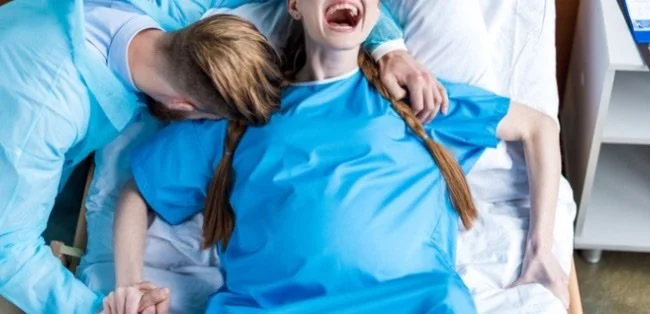
It's extraordinary when you consider how recently hospital birth became the norm.
For most of human history, women gave birth at home, supported by other women, family members, midwives and traditional birth attendants.
Today, home birth is often presented as an unusual, alternative or even radical choice.
But historically, isn't it hospital birth that's the experiment?
There's a tendency to paint a rather terrifying picture of birth in the past. Women dying in enormous numbers. Babies dying. Birth as something inherently dangerous from which modern medicine has rescued us.
Of course, childbirth has always carried risks. And improvements in sanitation, nutrition, antibiotics, blood transfusion and emergency surgery have saved countless lives.
But there are some uncomfortable chapters in the history of institutional birth that rarely make it into our conversations.
Take Ignaz Semmelweis, the nineteenth-century doctor who discovered that women were dying of puerperal fever because doctors were moving between performing autopsies and examining labouring women without adequately washing their hands.
The very people who were supposed to be keeping women safe were introducing deadly infections.
Mortality rates fell dramatically when hand disinfection was introduced.
It's an extraordinary historical reminder that medical care itself can often be the cause of harm.
This is known as iatrogenic harm.
Then came the twentieth century, and the rise of maternity hospitals.
You can understand the appeal.
Imagine being a woman in the 1940s or 1950s. Perhaps you had several children already, a house to run, washing to do by hand, heavy physical work and very little opportunity to rest.
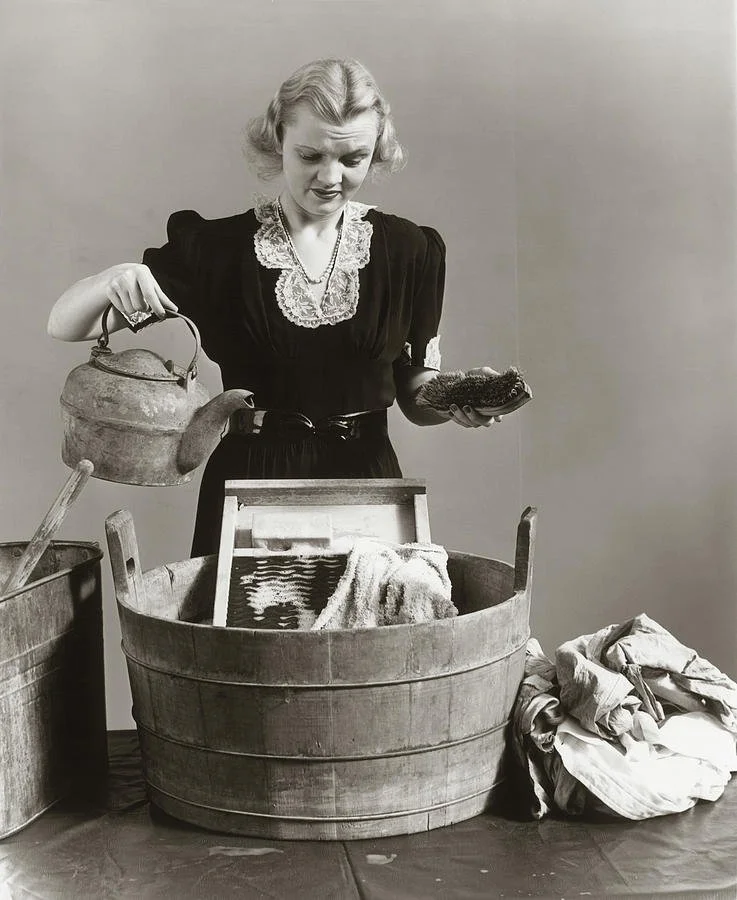
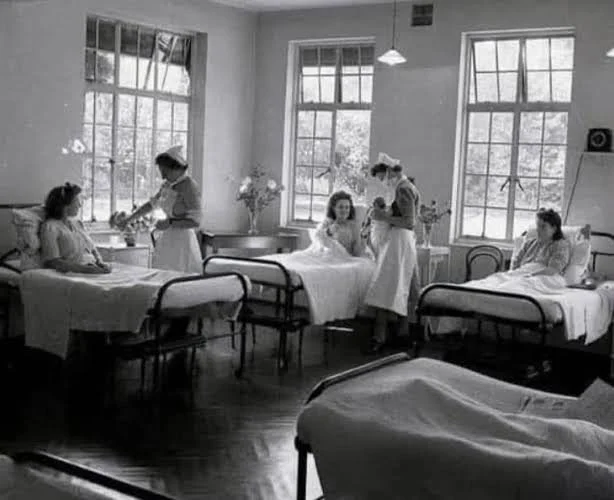
Along came these shiny new maternity hospitals.
Somewhere you could be looked after, fed, cared for, where someone else did the washing and you could rest after having your baby.
It must have seemed wonderful.
And gradually, hospital birth became the norm. By the 1970s, British maternity policy was actively moving towards making hospital birth available to all women.
Yet the wholesale move from home to hospital wasn't founded on the kind of robust comparative evidence we would expect today.
We've spent generations convincing women that hospital is the normal, responsible, safe place to give birth.
And medical interventions have become our modern symbols of safety.
The monitors. The machines. The drips. The doctors. The operating theatres.
But what does the evidence actually tell us?

What are the risks of going into hospital to give birth?
We're so accustomed to hearing about the risks of home birth.
What if something goes wrong? What if you bleed? What if your baby needs help? What if you need an emergency caesarean?
But how often are women encouraged to ask the reverse question?
What risks am I introducing by choosing to go into hospital?
And here's where the research gets really interesting.
In 2019, researchers published a major systematic review involving approximately half a million planned home births. They found no significant difference in perinatal or neonatal mortality between planned home births and comparable hospital births among women with pregnancies considered at low risk of complications.
Then in 2020, another systematic review examined maternal outcomes and medical interventions.
The findings were remarkable.
Compared with women planning hospital births, women planning home births in well-integrated maternity systems were less likely to experience:
Caesarean birth
Forceps or ventouse delivery
Epidural anaesthesia
Episiotomy
Third- or fourth-degree perineal tears
Artificial oxytocin to accelerate labour
Maternal infection
The research also found that postpartum haemorrhage was less common among women planning home births.
And remember, these comparisons looked at where women planned to give birth,
not simply where their babies were eventually born.
So women who planned home births but transferred into hospital were still counted in the home birth group.
Pause there for a second - just take in that fact - you can actually reduce your risk of ALL those serious birth related injuries
- simply by planning a homebirth!!!
In 2023, a Cochrane review also drew attention to the growing body of observational evidence suggesting that planned hospital birth for women with uncomplicated pregnancies does not necessarily improve safety, but may increase interventions and complications.
Now consider that for a moment.
We have built an entire culture around the assumption that moving birth into hospital makes it safer.
Yet a substantial body of research tells us that for women with straightforward pregnancies, planning birth at home is associated with significantly fewer interventions and injuries.
And these are not insignificant outcomes.
We're talking about women's bodies. Mother’s bodies.
Their pelvic floors. Their perineums. Their uteruses. Their recovery. Their future pregnancies. Their emotional wellbeing.
The impact of these injuries lasts not just weeks, or months
- but often for decades afterwards.
Shouldn't these outcomes matter too?
But wasn't it a good job she was in hospital?
How often have you heard a birth story that ends like this?
"It was a good job I was in hospital, because otherwise I would have died."
Or:
"Thank goodness I was there, because my baby needed an emergency caesarean."
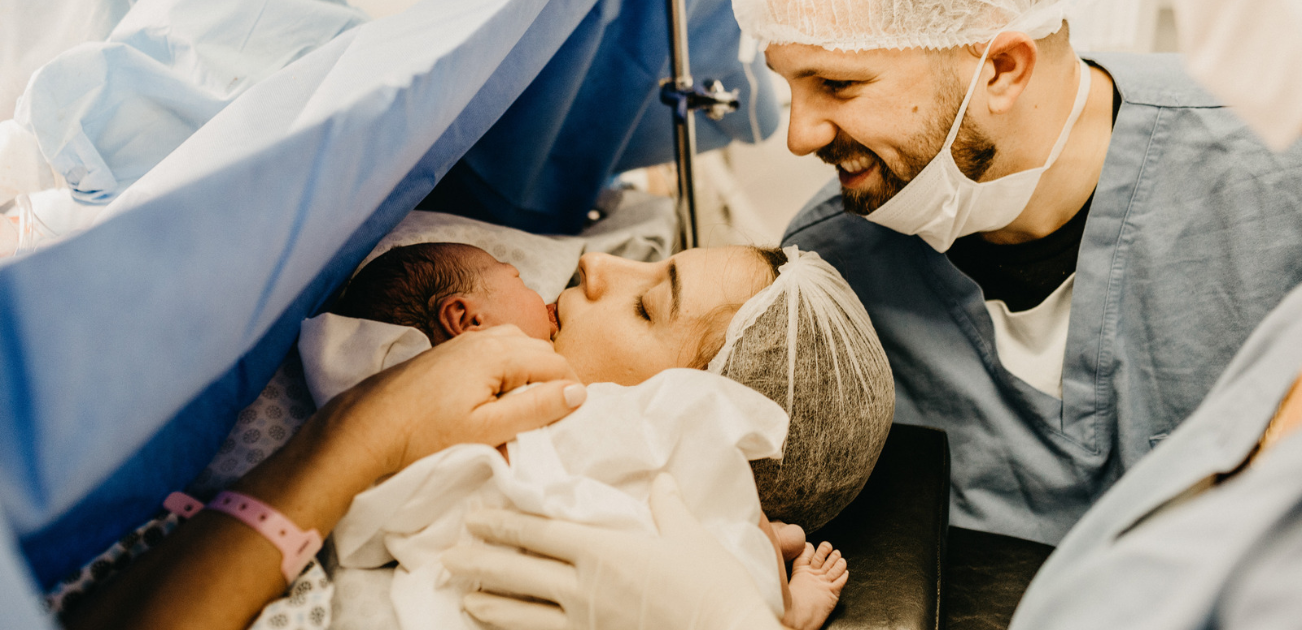
And of course, sometimes that's absolutely true.
There are circumstances where access to emergency obstetric care is life-saving.
Nobody is disputing that.
(And that’s why we talk about ‘planned homebirth’
never ‘homebirth at all costs’)
But there's another question we rarely seem willing to ask.
Did that emergency happen despite being in hospital,
or might the care and environment associated with leaving the safe home environment have contributed to it?
It's an uncomfortable question, isn't it?
When labour is interrupted, when a woman is disturbed by polite well meaning conversation, when she feels watched or pressured, when strangers continually enter the room, when she's asked to move positions, submit to examinations or meet institutional timescales, what happens to her physiology?
What happens to her oxytocin?
What happens when labour slows, and that slowing is interpreted as a problem requiring intervention?
Perhaps artificial oxytocin is introduced. Perhaps that leads to stronger, more frequent contractions, requiring additional monitoring or pain relief. Perhaps further interventions follow.
And sometimes, at the end of that chain of events, we find ourselves celebrating the intervention that finally brought the baby into the world without ever questioning the circumstances that led there.
Of course, not every emergency is caused by intervention,
and not every intervention leads to another…
But medical interventions do have unintended consequences.
That is well recognised.
The fact that an intervention was necessary at the end of labour doesn't automatically tell us whether everything that happened beforehand was necessary too - or what would have happened had a m other been supported by a trusted, known, midwife at home.
It's time we became more curious about that.
What if we started with the environment?
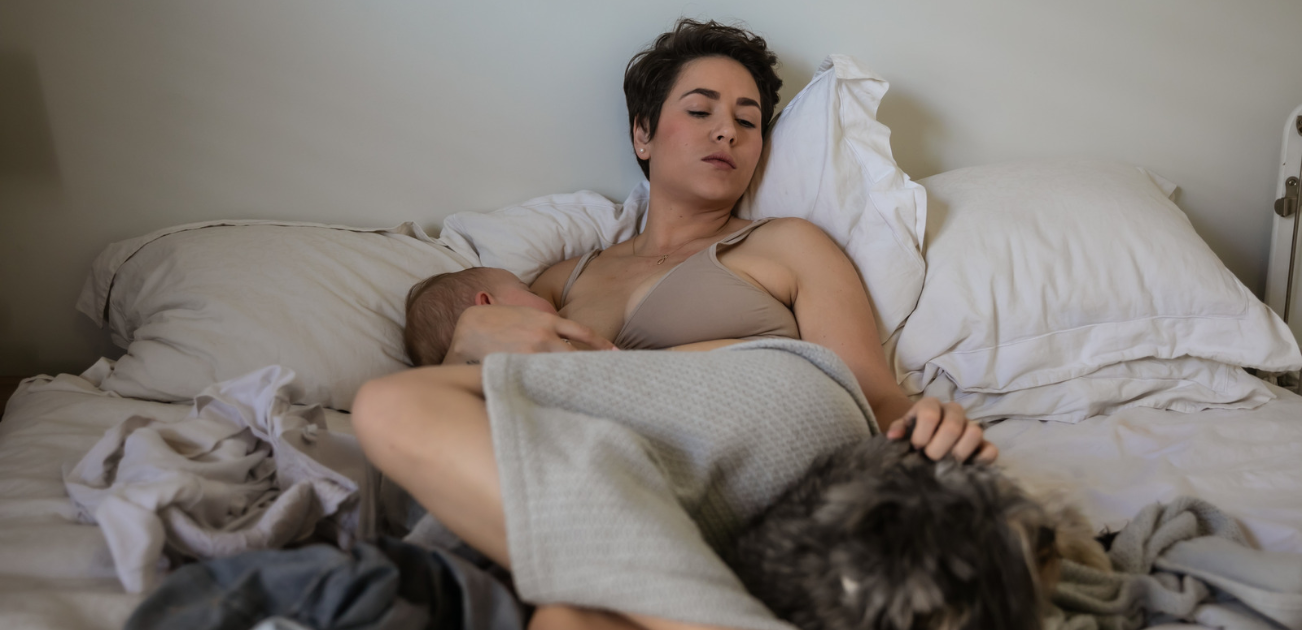
Imagine giving birth in your own home.
Your own smells. Your own sounds. Your own bed.
No journey in the car with contractions. No unfamiliar corridors. No bright clinical room to settle into. No strangers constantly changing shifts.
You can move wherever you want.
You can be in the bath, in the garden, in your bedroom, leaning over your kitchen worktop, curled up beside the fire.
You can eat, drink, rest, make noise, be quiet, be naked, be held.
You can surround yourself with people who know you.
People whose presence reassures you rather than requires you to explain yourself.
Your baby arrives into the familiar sounds of your home, into the arms of the people who love them.
Perhaps the cord is left undisturbed while your baby receives their placental blood. Perhaps you climb straight into your own bed, with your baby tucked against your chest.
No unnecessary separation. No disturbance to those precious first hours.
And no packing up and travelling home afterwards.
It sounds almost too simple, doesn't it?
Yet these are some of the things that can help create the conditions for physiological, normal, good old fashioned birth.
And alongside the physical outcomes, the safety
- surely we should be asking about women's experiences too?
Did she feel safe? Did she feel heard? Was she respected? Was she able to move freely?
Did she feel like an active participant in her own birth?
Or did she feel frightened, powerless, rushed or violated?
Safety is about so much more than simply surviving birth.
But can I have a home birth if…?
I've got a high BMI?
A low BMI?
I'm over 40?
I'm expecting a big baby? Or a small baby?
My baby is breech?
I've previously had a caesarean?
I've had a postpartum haemorrhage?
I've been told my pregnancy is complicated?
I've been labelled high-risk?
YES.
You absolutely can choose to give birth at home.
It's your body, your baby and your choice.
Somehow, we've created a culture in which women feel they need permission to give birth in their own homes.

As though a hospital guideline or a label in your maternity notes can automatically remove your right to make decisions about your body.
Of course, additional factors may need consideration.
Some circumstances carry additional risks, and some types of care that you might choose, cannot be replicated at home.
But a label shouldn't be the end of the conversation.
Rather than simply asking whether you're allowed to have a home birth, perhaps there are some better questions to ask:
What exactly is the additional risk in my individual circumstances?
What additional care would I receive in hospital because of that risk?
Could any of that care be arranged at home?
What risks might I introduce by choosing hospital birth instead?
What arrangements could be made if I needed to transfer?
What matters most to me, and what would help me feel safe, supported and confident?
You have the right to make informed decisions about your body, to accept or decline care, and to choose where you give birth.
You don't have to hand over your authority simply because you're pregnant.
Isn't it time we brought birth back home?
Isn't it extraordinary how thoroughly we've been convinced that leaving our homes, our familiar surroundings and the people we love is the sensible, responsible, safe thing to do when we're having a baby?
We've normalised the conveyor belt of appointments, monitoring, protocols and interventions.

We've made physiological birth seem unusual.
We've made hospital birth the default, and home birth something women are expected to justify.
But what if we turned that whole conversation around?
What if, instead of asking women why they want to give birth at home,
we started asking why we've made it so difficult for them to do so?
What if we invested in skilled, wise, known midwives, continuity of care and responsive home birth services?
What if we stopped treating women's bodies as problems waiting to happen?
And what if we began trusting women to understand the evidence,
explore their own circumstances and make decisions about their own births?
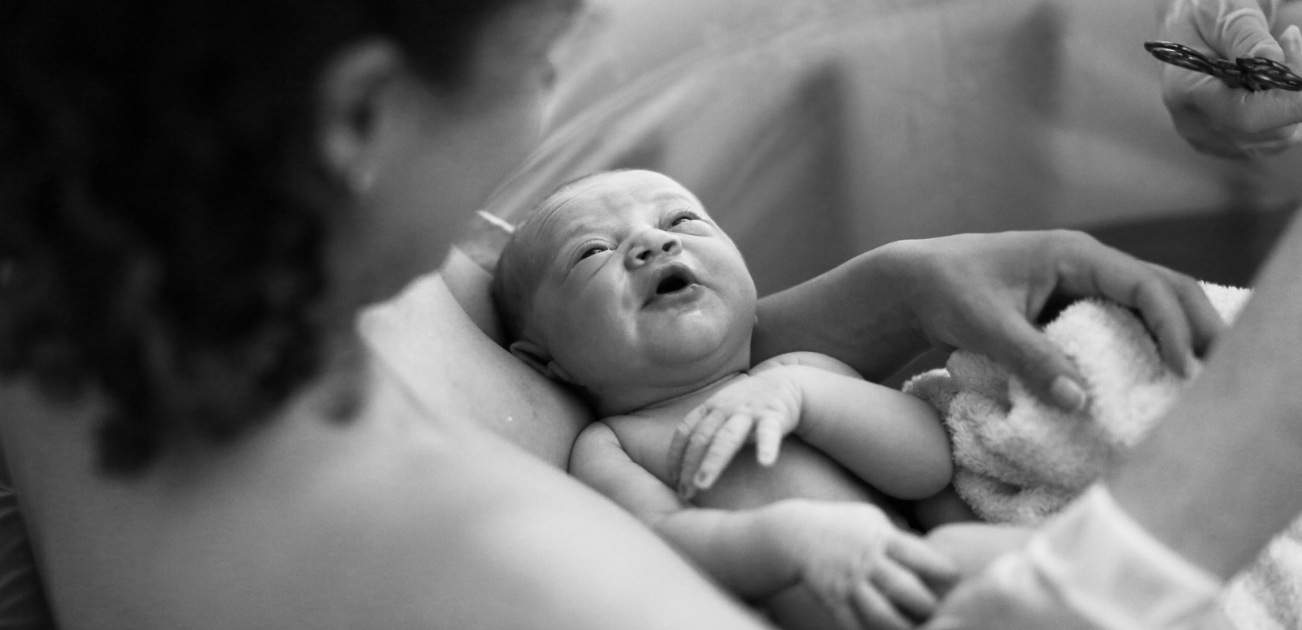
Isn't it time we started bringing birth back into the home, where it belongs?
I'd love to hear from you.
What stops you from considering home birth?
What are your barriers?
Are you curious but hesitant? Is it your partner, your family, your midwife, or something else entirely?
What would need to change for you to feel confident choosing to give birth at home?
I'd love to hear your thoughts.
I'm Emma Gleave, an antenatal educator and birthkeeper based in the Forest of Dean, Gloucestershire. I support women and families to prepare for birth with knowledge, confidence, practical skills and deep respect for their individual choices.
If you're considering home birth, or want to explore your options without pressure or judgement, you can find out more about my antenatal preparation and birth support and book in a free chat HERE
Resources

Recent Evidence: What Does the Research Tell Us?
Study after study has shown that planned home birth, particularly for women with uncomplicated pregnancies, is associated with fewer medical interventions and better maternal outcomes.
And yet, we're seeing a continued push towards centralisation and medicalisation of maternity services, rather than investing in home birth and continuity of midwifery care.
How crazy is that?
Explore the research
Hutton et al. (2019) – Planned home birth and perinatal mortality
A systematic review involving approximately half a million planned home births, finding no significant difference in perinatal or neonatal mortality between planned home and hospital births in the populations studied.Reitsma et al. (2020) – Maternal outcomes and interventions
A systematic review finding that planned home birth was associated with fewer obstetric interventions and certain maternal complications.Cochrane Review (2023) – Planned hospital birth versus planned home birth
Examines the evidence and questions the assumption that moving birth into hospital necessarily improves outcomes for women with uncomplicated pregnancies.NICE Intrapartum Care Guidelines (2023)
UK guidance supporting informed choice of birth setting and recognising the benefits of midwife-led care.
Take Birth Back Into Your Own Hands
With so much evidence pointing towards the benefits of planned home birth, why are we moving further towards centralised, medicalised maternity care?
I don't believe this is in women's best interests.
Do yourself a favour. Take birth back into your own hands.
And if you've got doubts, or your partner has doubts, you don't have to work through them alone.
I specialise in helping women and their partners unpick the fears, questions and assumptions surrounding birth. Meeting you wherever you're at, exploring the evidence, understanding your individual circumstances and helping you come to the decision that's right for you.
Not the decision someone else thinks you should make.
Your body. Your baby. Your birth. Your choice.