What happens when women gather with the shared intention of nurturing, witnessing and holding another woman? This summer, I have had the privilege of finding out.
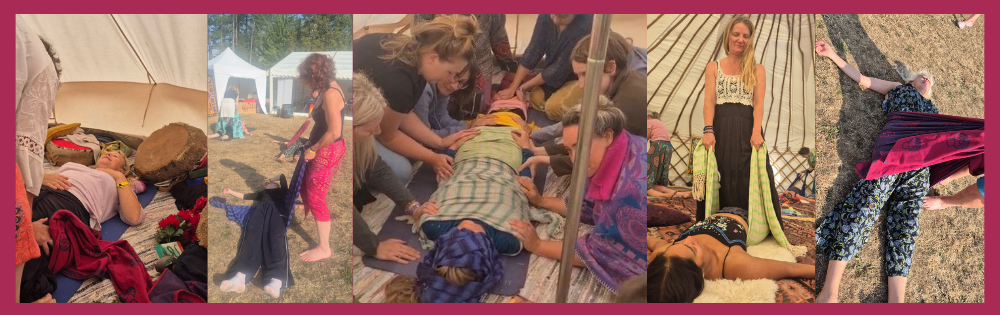
Over the last few weeks, I have shared Closing the Bones and rebozo work with women through one-to-one treatments and community workshops—most recently at Sun and Moon Festival.
I have been completely bowled over by how many women answered the call. Some arrived knowing a little about Closing the Bones. Some had never heard of it. Others, like me for many years, had been quietly curious: What actually is Closing the Bones? What happens during it—and why can it feel so powerful?
My intention was to demystify the practice and allow women to experience it for themselves, not simply hear me explain it.
“I realised I have never been properly held like that before”
In the one-to-one treatments, women experienced profound releases in their bodies. For some, ancestral threads arose to be acknowledged and worked through. Others felt connections with past lives, memories or emotions that could not easily be explained in words.
Women said:
“I’ve never felt so relaxed in my entire life.”
“I realised I’ve never been properly held like that before.”
“Are you magic?”
“I just can’t put into words what just happened.”
“Every woman should experience this.”
I don’t think I am magic. But I do think there is something deeply powerful about being met with time, intention, touch and complete presence. The body does not always need to be analysed or fixed. Sometimes it needs to feel safe enough to soften. Sometimes it needs to be wrapped, rocked, witnessed and held.
Sometimes it needs to know that it no longer has to carry everything alone.
A gift to a community that has given me so much
It has been an absolute joy to offer these treatments within a gift economy at Sun and Moon. I have received so much from this community over the years. It is one of the most diverse, inclusive and welcoming spaces I know: a place where different generations can arrive and belong, and where it feels unusually easy to connect.
Offering this work there felt like giving something back—but it also gave a great deal to me.
Again and again, I saw tears in women’s eyes as they gathered around another woman. They were not only watching a demonstration or learning a technique. They were remembering what it feels like to sit in a circle with other women, joined by the shared intention to nurture and hold someone.
It may have been only one workshop, one circle, one piece of cloth and a few moments of shared care. A drop in the ocean.
But it felt like a drop, in the ocean of remembering.
What makes it a ceremony?
This was one of the questions we explored together: what makes a ceremony a ceremony, rather than simply another treatment?
Perhaps it begins with intention. We consciously open a space and recognise that something meaningful is happening. The woman at the centre is not processed, treated or hurried through. She is witnessed.
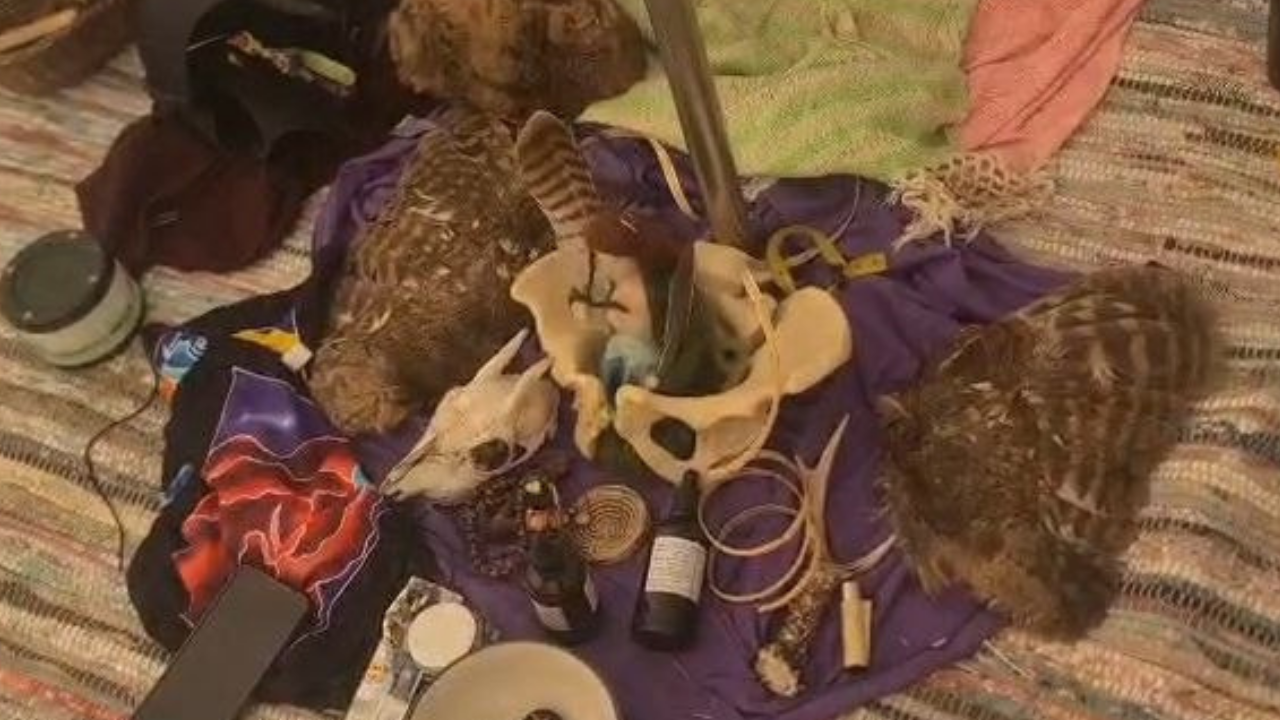
An altar can offer a physical expression of that intention. A woman might write a letter about what she is releasing, reclaiming or stepping towards, then read it aloud in the presence of people she trusts. Music, drumming, chanting, touch and nurturing can help us move out of our busy minds and back into our bodies.
But none of these things is compulsory. Ceremony is not created by collecting the right objects or performing something perfectly. It lives in the quality of our attention: in reverence, presence, intention and witness.
Remembering our rites of passage
I feel that community rites of passage are one of the things most painfully missing from our lives.
We live in a time when birth, rites of passage—and so much of life—has been colonised, medicalised and moved away from the home, the body and the community. Many of us are left searching for a way back, unsure where to begin.
But perhaps the way back is not as distant as it seems.
It takes someone who has been helped to remember, who can then help other women remember. Not to copy another culture or claim ownership of its traditions, but to receive knowledge with humility, honour where it has come from, and allow it to awaken something within our own communities.
I am deeply honoured to be holding and sharing teachings gifted to me through the traditional midwives and healers of Mexico. I remain a student of this work. My skills are growing, and I am still learning how to carry it with the respect it deserves.
This path did not begin with a training course. I have been walking towards it for a long time—at least since becoming pregnant and becoming a mother eighteen years ago.
Since then, I have been searching for ways to connect more deeply with the land, with family, with other women and with the wisdom held in our bodies.
Imagine a community gathered around one woman
Now imagine four, five or ten women gathering around a postnatal mother.
Imagine her friends and family creating the altar, preparing food, warming oils and sitting beside her.
Imagine them learning how to rock and wrap her with the rebozo, how to offer safe, loving touch, and how to witness her as she speaks about what she has lived through and who she is becoming.
One woman receives—but everyone present becomes part of the ceremony.
They do not leave having merely watched a treatment. They leave having experienced another way of caring for women. They carry that memory in their hands and bodies, ready to offer it within their own families and communities.
This is the seed of Community Closing the Bones: a ceremony held for one woman and created by the women who surround her. I bring the rebozos, prepare and hold the space, guide each stage and teach the gathered women how to participate. Together, we make the village visible.
Although Closing the Bones is often associated with the postnatal time, the need to be witnessed and held is not limited to birth.
A closing may honour a loss, illness, separation, menopause, a significant transition, or simply the ending of a chapter that the body is still carrying.
Carrying the songs
Part of my own journey now is strengthening my voice so that I can carry more of the chants and songs that belong within this work.
This summer, I was gifted a beautiful deerskin drum by the amazing Fanita. A drum has felt like the missing piece in my practice, and I am so grateful—and honestly, completely made up—to have received it through such a meaningful exchange. To drum in a circle and feel the rhythm move through our bodies brought another depth to the ceremony.
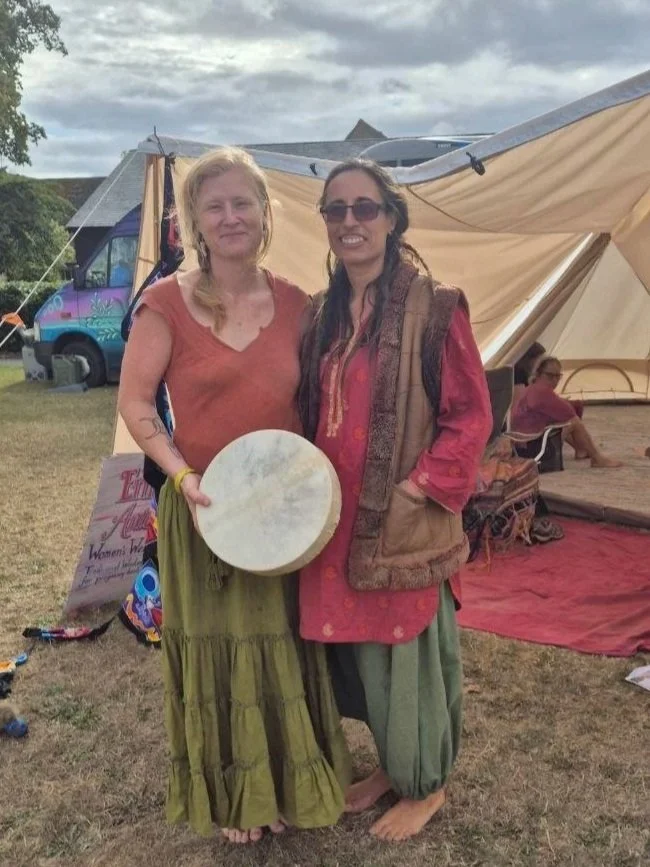
I will soon be making more of my own drums, using rawhide from the Forest of Dean: another thread connecting this work to the land and community in which I live.
An invitation
I am so excited to begin offering Community Closing the Bones more widely.
This is not about creating another service for women to consume alone. It is an invitation to gather your people; to allow yourself to be nurtured; and to give those who love you a meaningful way to participate.
It is a chance for us to practise ceremony rather than merely talk about it—and to remember, together, how women can hold one another.
If you feel called to receive a Community Closing the Bones ceremony, or would like to gather around a woman you love, please get in touch. I would be honoured to help you create it.