Why I Say Yoni…
Yoni.
Pronounced roughly YO-nee.
(As in yo-yo)
You will hear me use this word quite often in my work — in women's wellness classes, pelvic health work, massage, birth preparation and when talking about the female body.
And occasionally I am asked why.
Why not simply say vagina?
The answer is that yoni means something much bigger.
Where does the word Yoni come from?
Yoni is a Sanskrit word.
Sanskrit is one of the world's ancient languages and the language in which many of the early yogic and Vedic teachings were preserved.
The word yoni appears in ancient Sanskrit texts and carries several interconnected meanings: womb, vulva, female reproductive organs, source, origin, birthplace, resting place or place of creation.
I particularly love the sense of source.
A sacred bowl.
A place from which life emerges.
Not simply one anatomical tube or one individual part of the female body, but something much wider: the place of creation.
That is what I am trying to convey when I use the word.
Words carry meaning
My relationship with Sanskrit comes through yoga.
There is a long tradition within yoga of understanding sound as more than simply a vehicle for conveying information.
Mantra and Vedic chanting work with sound, breath, rhythm, repetition and vibration. Words are shaped deliberately within the mouth and carried on the breath.
I have always loved this aspect of practice.
There is something very different about singing or chanting a word compared with merely thinking it.
You feel it.
The vibration travels through the mouth, jaw, throat and chest. Breath changes. Attention changes. Sometimes your whole internal state changes.
It is said that hundreds of meridians finish on the roof of the. mouth, so the effects of chanting & the words we speak, effect our whole physiology.
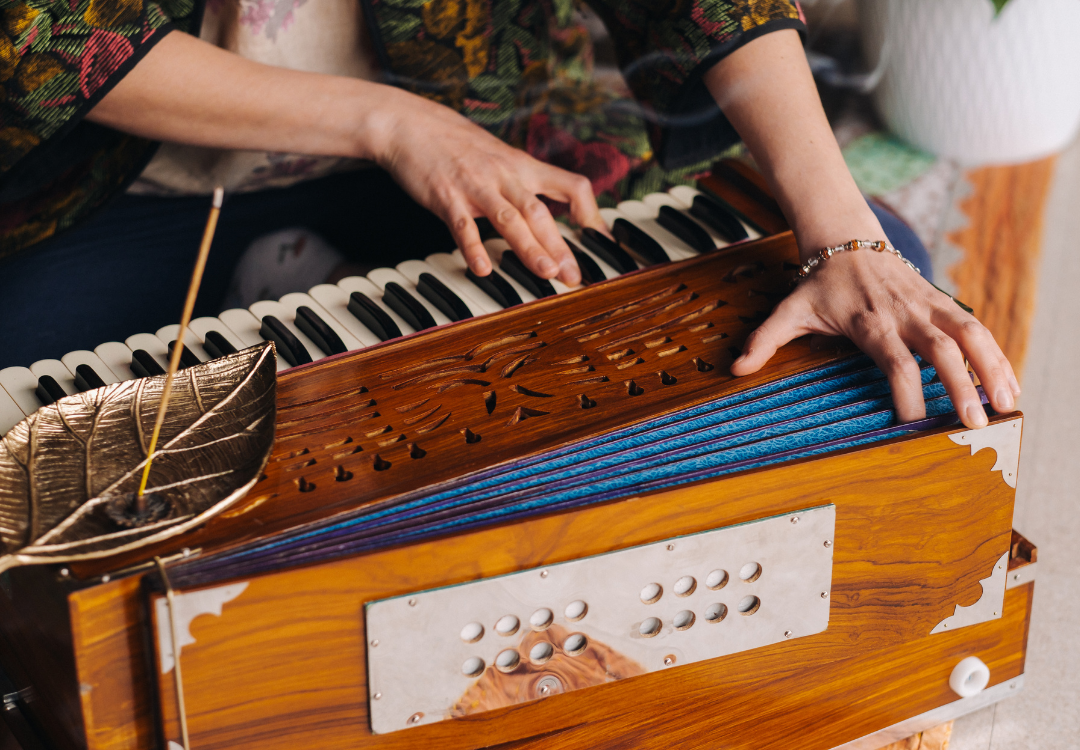
I have spent many happy hours chanting and singing, and I still love getting my harmonium out and playing.
Whether we understand that through ancient teachings about sound and consciousness, through the effect of breathing and rhythm on the nervous system, or simply through our own experience, I think the words we repeatedly speak matter.
And the words we use for women's bodies certainly matter.
Yoni doesn't replace anatomy
Using the word yoni doesn't mean I don't believe girls and women should know the correct names for their anatomy.
Quite the opposite.
I think we should know our bodies extraordinarily well.
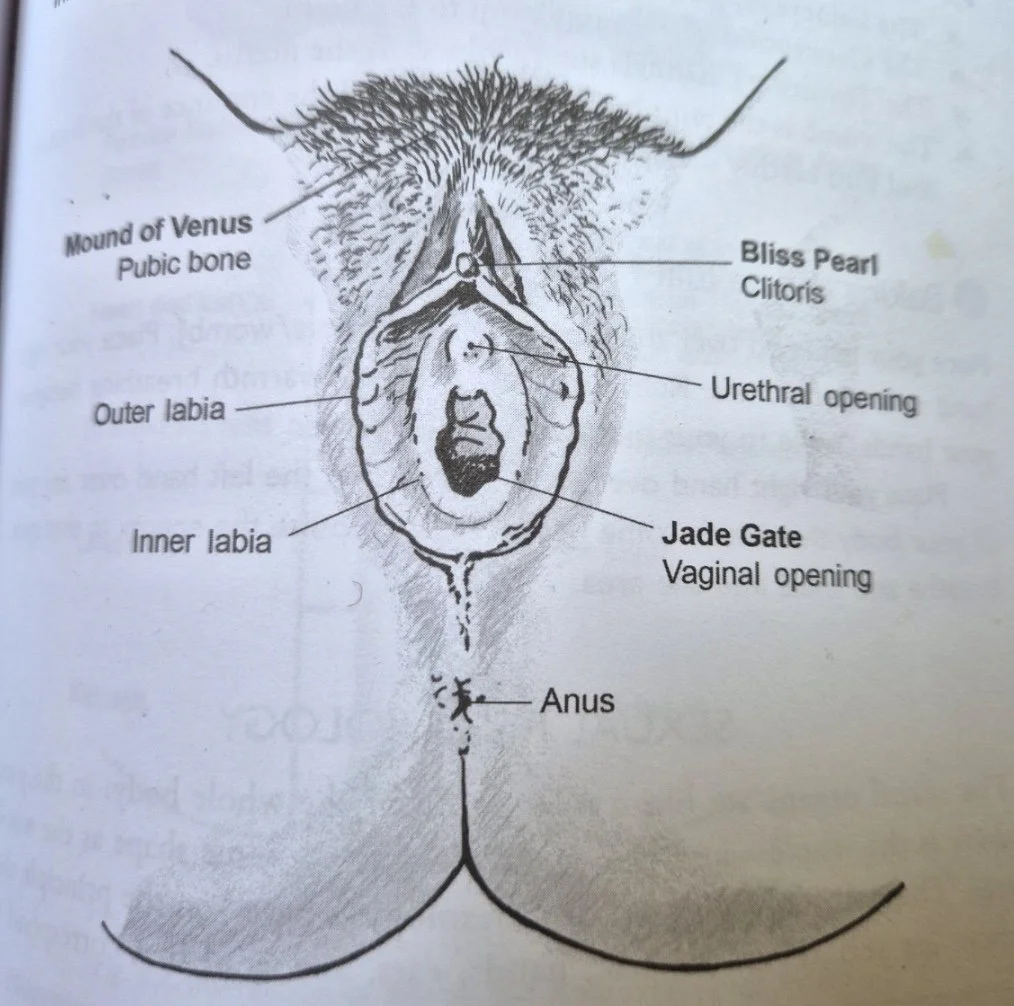
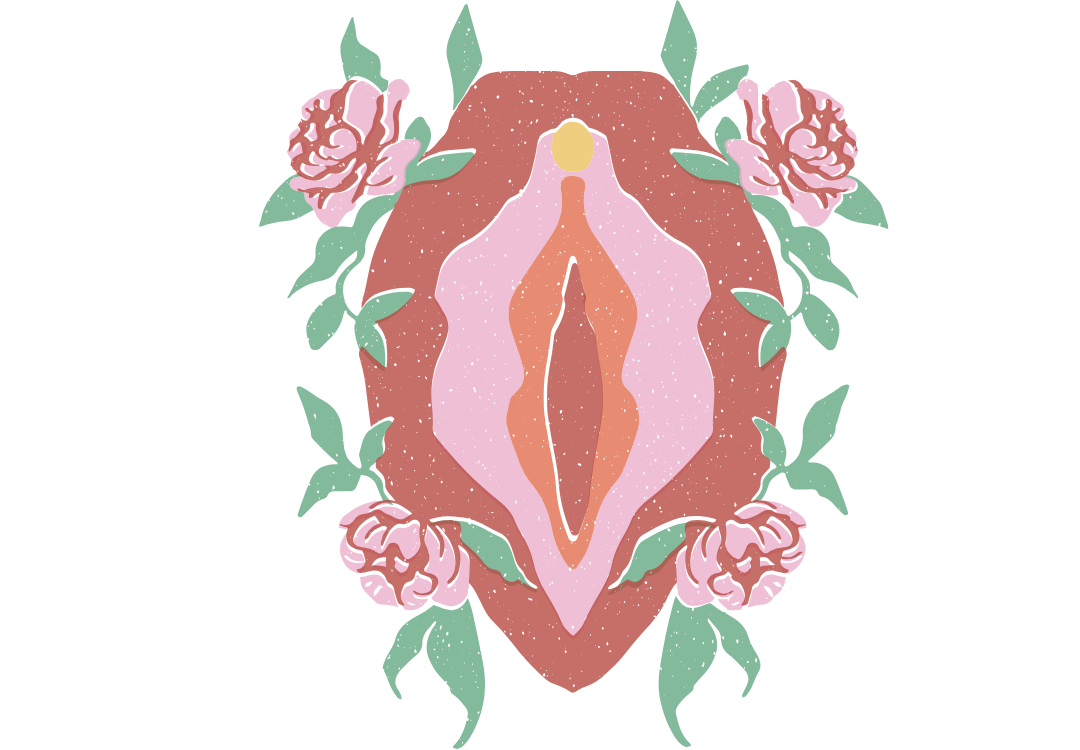
Our vulva is the external genital area. It includes the labia majora — the outer lips — the labia minora — the inner lips — the clitoris and clitoral hood, and the openings of the urethra and vagina.
Behind this is the perineum, the area of tissue between the vaginal opening and anus.
Inside is the vagina, the muscular canal leading towards the cervix, and beyond this the uterus, fallopian tubes and ovaries.
These words matter.
If something hurts, changes, tears, prolapses or needs medical attention, being able to say exactly where matters.
I don't want to replace anatomical knowledge with vague language about sacred femininity.
I want women to have both.
Precise knowledge of our anatomy — and language that reminds us that our bodies are more than a collection of medical parts.
And then there is the word vagina
This is where it gets interesting.
The English anatomical word vagina comes through medical Latin from the Latin vagina,
meaning a sheath or scabbard.
The anatomical use came later.
A sheath.
A place into which a sword is put.

Once you know that, you may begin to understand why some women don't feel particularly inspired by defining this part of the female body through a word historically meaning the receptacle for a blade.
Especially when the vagina has functions and experiences that have absolutely nothing to do with penetration by a penis.
It bleeds.
It lubricates.
It expands.
It births babies.
It responds to hormones.
It changes throughout our lives.
And it belongs entirely to the woman whose body it is part of.
So although I absolutely use the word vagina when I mean the vagina, I don't want vagina to become the catch-all word for the whole of our female reproductive anatomy.
It isn't.
And sometimes I want a word that means more.
That is where yoni comes in.
Yoni Shakti
One of the women who has deeply influenced my work is my teacher Uma Dinsmore-Tuli, author of Yoni Shakti: A Woman's Guide to Power and Freedom through Yoga and Tantra.

Her work examines the sexual politics and history of yoga, including women's contribution to — and exclusion from — traditional hatha yoga, and brings together yoga, tantra, womb awareness, cyclical health and feminism.
This was enormously important for me.
Because so much of modern yoga has been passed down through predominantly male lineages.
And women's bodies are not simply smaller versions of men's bodies.
We menstruate.
We ovulate.
We conceive.
We miscarry.
We grow babies.
We birth.
We breastfeed.
Our pelvic tissues respond to changing hormones.
We move through perimenopause and menopause.
Our bodies are cyclical throughout enormous portions of our lives.
Yet very often women have been asked to fit themselves into practices, systems and expectations that were not designed around female physiology.
It is one of the reasons I feel so passionate about women's wellness classes and yoga specifically for women's pelvic health.
Coming home to our own bodies
There is something much deeper here than terminology.
When a woman begins to really understand her pelvis — not intellectually, but through sensation — something changes.
She starts to recognise tension.
Softening.
Holding.
Pressure.
Opening.
Pleasure.
Fear.
Instinct.
She begins to know where her pelvic floor actually is rather than simply being told to squeeze it.
And in pregnancy and birth, that embodied awareness can become incredibly powerful.
Part of the work I teach around preparing the body for birth and reducing the likelihood of tearing is about understanding anatomy.
But another part is about reconnecting with our own internal guidance.
Our wildish nature.
Knowing when to move.
When to breathe.
When to make sound.
When to stop being watched.
When to close the door.
When to open our legs.
When not to.
When to bear down.
When to soften.
When to wait.
The female body is not passive during birth.
It is doing something extraordinarily sophisticated.
This matters far beyond preventing a tear
Of course I want women to come through birth without unnecessary injury.
Not tearing matters.
Protecting the pelvic floor matters.
Avoiding unnecessary damage matters.
But this work goes so much further than whether somebody needs stitches after birth.
Because birth can influence the way a woman inhabits her body for decades afterwards.
Pain during sex.
Pelvic heaviness.
Urinary or faecal incontinence.
Prolapse.
Scar pain.
Fear of movement.
Disconnection from sexuality.
Feeling as though this part of her body no longer belongs to her.
We tend to separate all of these things into neat professional boxes.
Pregnancy.
Birth.
Postnatal recovery.
Pelvic health.
Sexuality.
Menopause.
Women's wellbeing.
But a woman does not live in boxes.
It is one body.
One life.
One continuous relationship with herself.
That is why my work cannot really be separated into boxes either.
The creative centre
And there is another meaning of yoni that I love.
Source.
Creation.
We tend to think about female reproductive power only in terms of creating babies.
But our creative energy does not disappear when we are not pregnant.
Nor does it disappear after our fertile years have ended.
Women create businesses.
Homes.
Art.
Communities.
Ideas.
Relationships.
Movements.
Gardens.
Books.
Songs.
Ceremonies.
Entire new ways of living.
There is something profoundly powerful about feeling that creative force anchored within the body rather than constantly looking outside ourselves for permission, instruction or validation.
Having your power held within your own body — and then using it to create in the world.
That, to me, is Yoni Shakti.
So when you hear me say Yoni…
Know that I am not being coy about women's anatomy.
I am not frightened of the words vulva, clitoris or vagina.
Quite the opposite.
I want women and girls to know those words.
I want them to know exactly what is where.
But sometimes anatomy alone does not contain everything I want to say.
When I say Yoni, I am speaking about the source.
The sacredness.
The reproductive body.
The sexual body.
The birthing body.
The intuitive body.
The creative body.
The portal through which every human being who has ever been born vaginally has entered this world.
A whole Yoniverse.
A gateway to the life-giving, creative brilliance that women hold.
And perhaps that sounds grand.
But birth is grand.
Women's bodies are extraordinary.
And I think the language we use around them should sometimes be allowed to reflect that.
My life's work has become increasingly devoted to women's health — particularly around pregnancy and birth, but really through every stage of a woman's life.
Because I don't think we can separate birth from women's health.
Or women's health from how women are treated.
Or how women are treated from the cultures we create.
When we change the way women are supported around birth, we change far more than birth.
The world begins to change too.
And it already is.
I did.
I am.
And I want you — and every woman who wants it — to know that she can too.

Want to explore this more deeply?
My Breathe Your Baby Out – Pelvic Wisdom for Pregnancy, Birth & the Rest of Your Life course brings together pelvic anatomy, breath, movement, instinct, birth preparation and long-term pelvic wellbeing.
It’s not just about how to birth your baby. It’s about understanding your body, reconnecting with your pelvic wisdom, and protecting that relationship for the rest of your life.